Improving Usability and Structure in e-Commerce for SMEs
Improving Usability and Structure in e-Commerce for SMEs
UX Audit
UX Audit
Stakeholder Management
Stakeholder Management
User Research
User Research
Information Architecture
Information Architecture
Design Report
Design Report
COMPANY
FISHRY
INDUSTRY
E-COMMERCE
ROLE
UX STRATEGIST
YEAR
2023
In a nutshell
In a nutshell
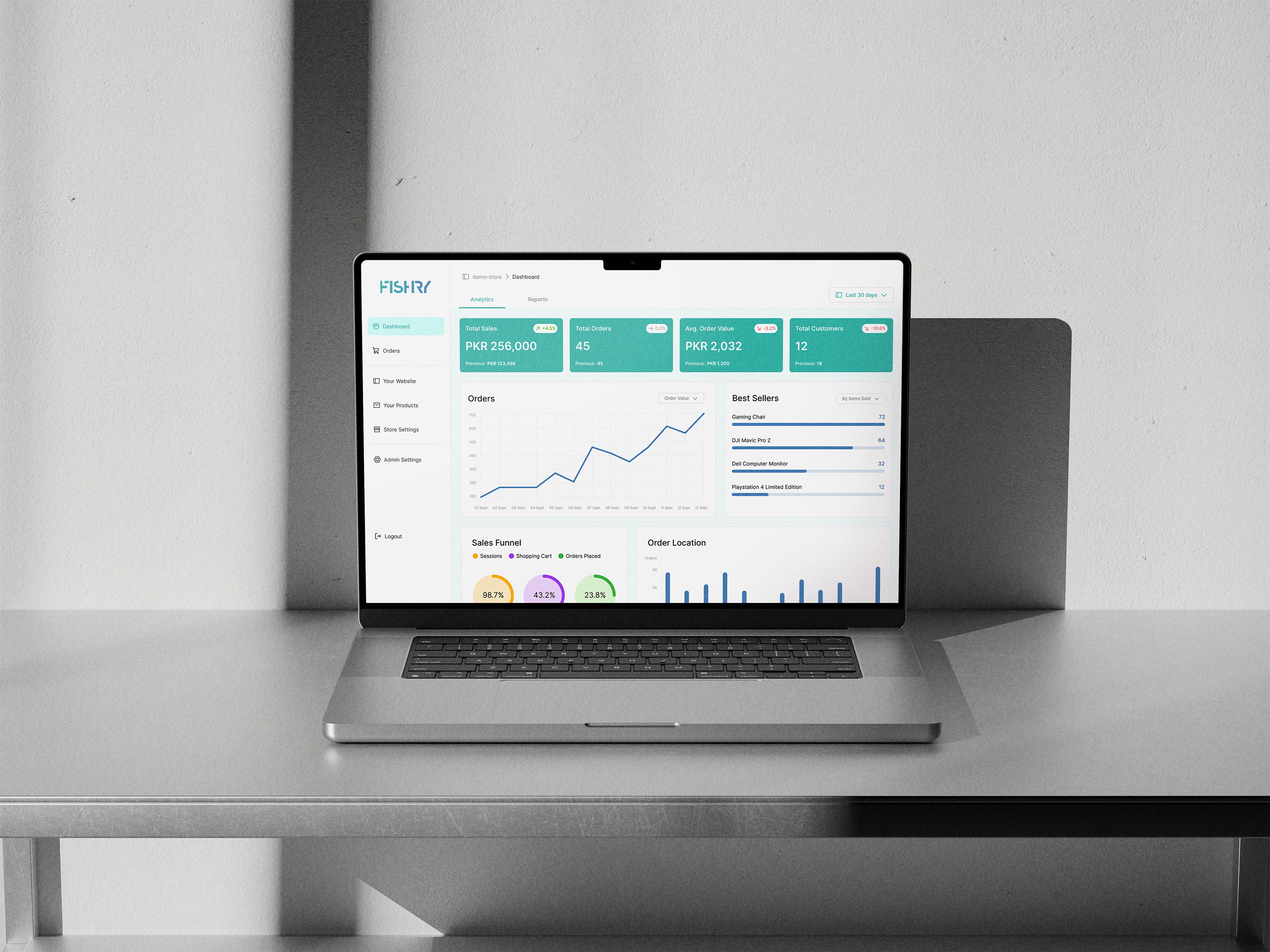
Fishry is a Shopify / WooCommerce–like SaaS platform that enables SMEs to build and manage their own online marketplaces using templates. While the platform addressed a real need for affordable, local e-commerce, it faced increasing usability complaints and low adoption among women entrepreneurs.
IDEATE Innovation partnered with Fishry to understand how SMEs actually use the platform, identify usability and structural issues, and define a clearer product direction. The engagement focused on research, UX auditing, and information architecture, resulting in strategic recommendations and a conceptual redesign. The information architecture improvements were shipped, while the broader redesign informed roadmap prioritization.
Fishry is a Shopify / WooCommerce–like SaaS platform that enables SMEs to build and manage their own online marketplaces using templates. While the platform addressed a real need for affordable, local e-commerce, it faced increasing usability complaints and low adoption among women entrepreneurs.
IDEATE Innovation partnered with Fishry to understand how SMEs actually use the platform, identify usability and structural issues, and define a clearer product direction. The engagement focused on research, UX auditing, and information architecture, resulting in strategic recommendations and a conceptual redesign. The information architecture improvements were shipped, while the broader redesign informed roadmap prioritization.
Context and challenge
Context and challenge
Fishry primarily served SMEs selling online, many of whom transitioned from Instagram or WhatsApp commerce to websites for the first time. Compared to global tools, Fishry was more accessible and affordable, but harder to navigate and scale with.
Key challenges included:
Confusing navigation and unclear information hierarchy
High cognitive load for low and mid tech-literate users
Inconsistent terminology and poor system feedback
Difficulty understanding how features supported business growth
These issues affected SMEs broadly, with a disproportionate impact on women entrepreneurs.
Fishry primarily served SMEs selling online, many of whom transitioned from Instagram or WhatsApp commerce to websites for the first time. Compared to global tools, Fishry was more accessible and affordable, but harder to navigate and scale with.
Key challenges included:
Confusing navigation and unclear information hierarchy
High cognitive load for low and mid tech-literate users
Inconsistent terminology and poor system feedback
Difficulty understanding how features supported business growth
These issues affected SMEs broadly, with a disproportionate impact on women entrepreneurs.

My role
My role
I worked across research synthesis and UX strategy, collaborating with the project lead and another researcher.
Responsibilities included:
Participating in qualitative interviews and focus groups
Synthesizing insights across multiple user segments
Conducting a heuristic-based UX audit
Translating findings into IA recommendations and conceptual design
I worked across research synthesis and UX strategy, collaborating with the project lead and another researcher.
Responsibilities included:
Participating in qualitative interviews and focus groups
Synthesizing insights across multiple user segments
Conducting a heuristic-based UX audit
Translating findings into IA recommendations and conceptual design
Research
Research
We conducted 21 interviews and two focus groups with Shopify sellers, Instagram entrepreneurs, Fishry users, Fishry dropouts, customers, and the internal Fishry team. We also conducted a thorough UX audit of the existing application.
We conducted 21 interviews and two focus groups with Shopify sellers, Instagram entrepreneurs, Fishry users, Fishry dropouts, customers, and the internal Fishry team. We also conducted a thorough UX audit of the existing application.
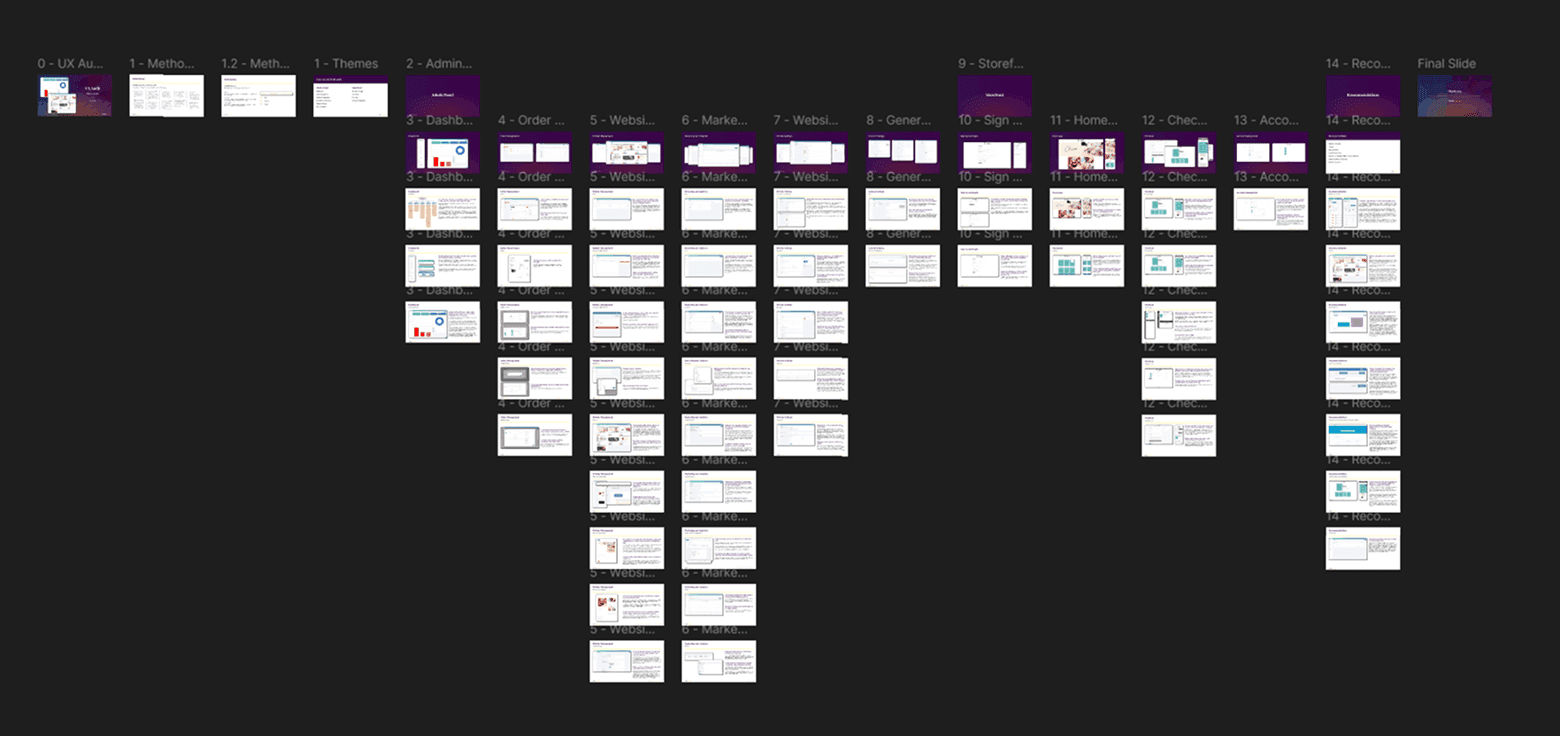
Snapshot of final UX Audit report
Snapshot of final UX Audit report
Across research and the UX audit, we identified a few clear patterns:
Across research and the UX audit, we identified a few clear patterns:
1
Trust and familiarity matter
Users felt more confident with Shopify despite its complexity, largely due to brand credibility and clarity.
1
Trust and familiarity matter
Users felt more confident with Shopify despite its complexity, largely due to brand credibility and clarity.
1
Trust and familiarity matter
Users felt more confident with Shopify despite its complexity, largely due to brand credibility and clarity.
2
Instagram sets expectations
Direct communication and immediacy shaped how SMEs expected digital commerce tools to behave.
2
Instagram sets expectations
Direct communication and immediacy shaped how SMEs expected digital commerce tools to behave.
2
Instagram sets expectations
Direct communication and immediacy shaped how SMEs expected digital commerce tools to behave.
3
FISHRY was approachable, but limiting
Users valued affordability and account support, but struggled with navigation, automation, and scaling.
3
FISHRY was approachable, but limiting
Users valued affordability and account support, but struggled with navigation, automation, and scaling.
3
FISHRY was approachable, but limiting
Users valued affordability and account support, but struggled with navigation, automation, and scaling.
4
Low tech literacy amplified friction
Complex dashboards, jargon, and unclear labels increased reliance on support.
4
Low tech literacy amplified friction
Complex dashboards, jargon, and unclear labels increased reliance on support.
4
Low tech literacy amplified friction
Complex dashboards, jargon, and unclear labels increased reliance on support.
5
Structure was the core issue
Many usability problems stemmed from poor information architecture rather than missing features.
5
Structure was the core issue
Many usability problems stemmed from poor information architecture rather than missing features.
5
Structure was the core issue
Many usability problems stemmed from poor information architecture rather than missing features.
The audit reinforced these findings, highlighting issues with navigation consistency, visual hierarchy, system status visibility, and error prevention across the admin experience.
The audit reinforced these findings, highlighting issues with navigation consistency, visual hierarchy, system status visibility, and error prevention across the admin experience.
Design decisions
Design decisions
Information architecture & navigation
Users struggled to form a mental model of the platform due to overlapping menus and inconsistent navigation patterns. We proposed a restructured information architecture that grouped related functions more logically, reduced redundancy, and made primary actions easier to find.
Information architecture & navigation
Users struggled to form a mental model of the platform due to overlapping menus and inconsistent navigation patterns. We proposed a restructured information architecture that grouped related functions more logically, reduced redundancy, and made primary actions easier to find.
This restructuring improved discoverability and reduced confusion, and was implemented post-handoff.
This restructuring improved discoverability and reduced confusion, and was implemented post-handoff.
Dashboard, hierarchy & accessibility
The previous dashboard surfaced less meaningful data more prominently than critical business insights. We redesigned the hierarchy to prioritize orders, sales performance, and actionable metrics, helping SMEs understand how their business was doing at a glance.
Accessibility improvements were addressed alongside hierarchy:
Simpler language and reduced jargon
Clearer labels and helper text
More visible system feedback and error states
Together, these changes reduced cognitive load for low and mid tech-literate users.
Dashboard, hierarchy & accessibility
The previous dashboard surfaced less meaningful data more prominently than critical business insights. We redesigned the hierarchy to prioritize orders, sales performance, and actionable metrics, helping SMEs understand how their business was doing at a glance.
Accessibility improvements were addressed alongside hierarchy:
Simpler language and reduced jargon
Clearer labels and helper text
More visible system feedback and error states
Together, these changes reduced cognitive load for low and mid tech-literate users.

New navigation included breadcumbs and tabs to help users maintain awareness of their location within the platform.
New navigation included breadcumbs and tabs to help users maintain awareness of their location within the platform.
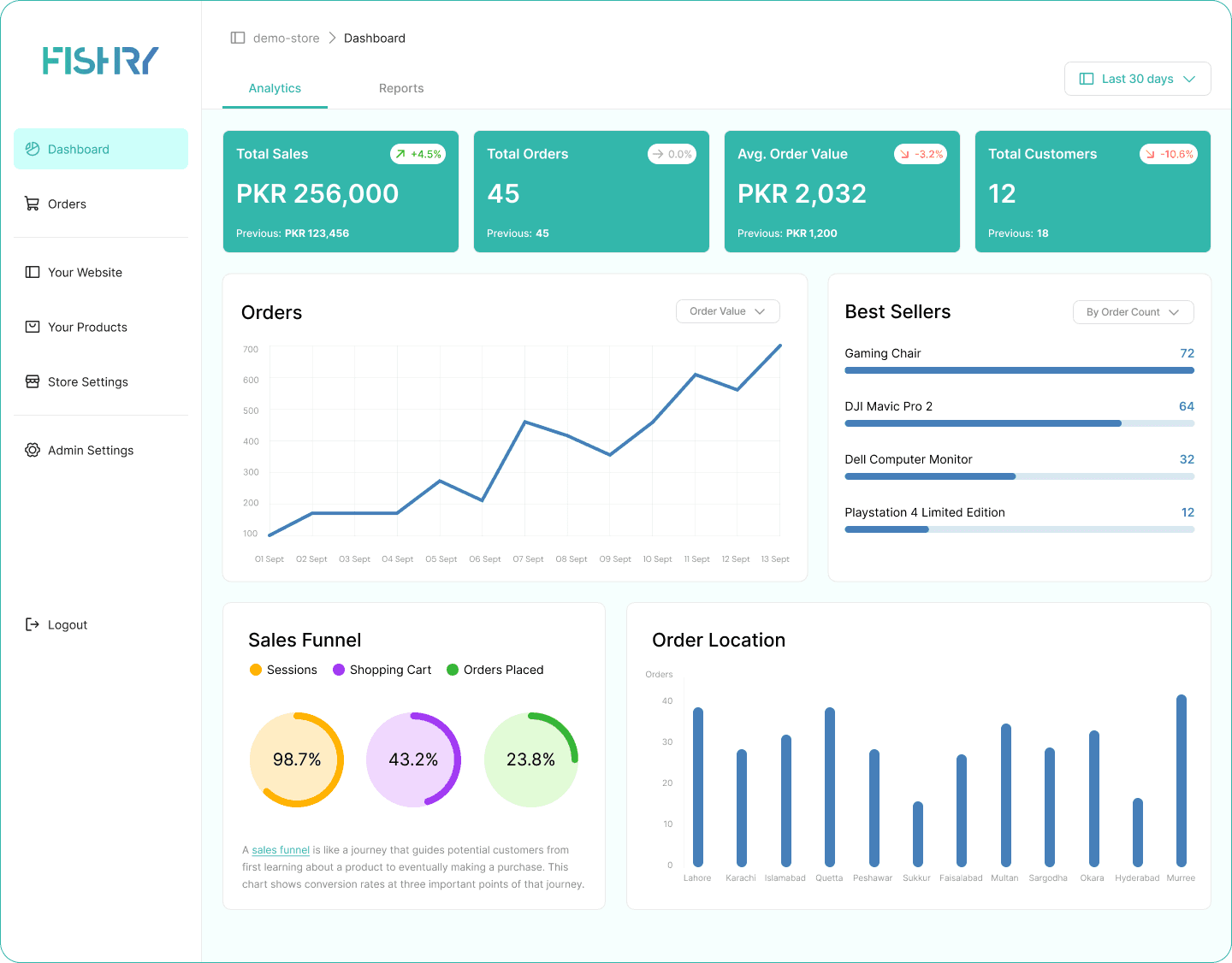
Redone dashboard prioritized more meaningful data, while keeping navigation simple
Redone dashboard prioritized more meaningful data, while keeping navigation simple
Website & theme management
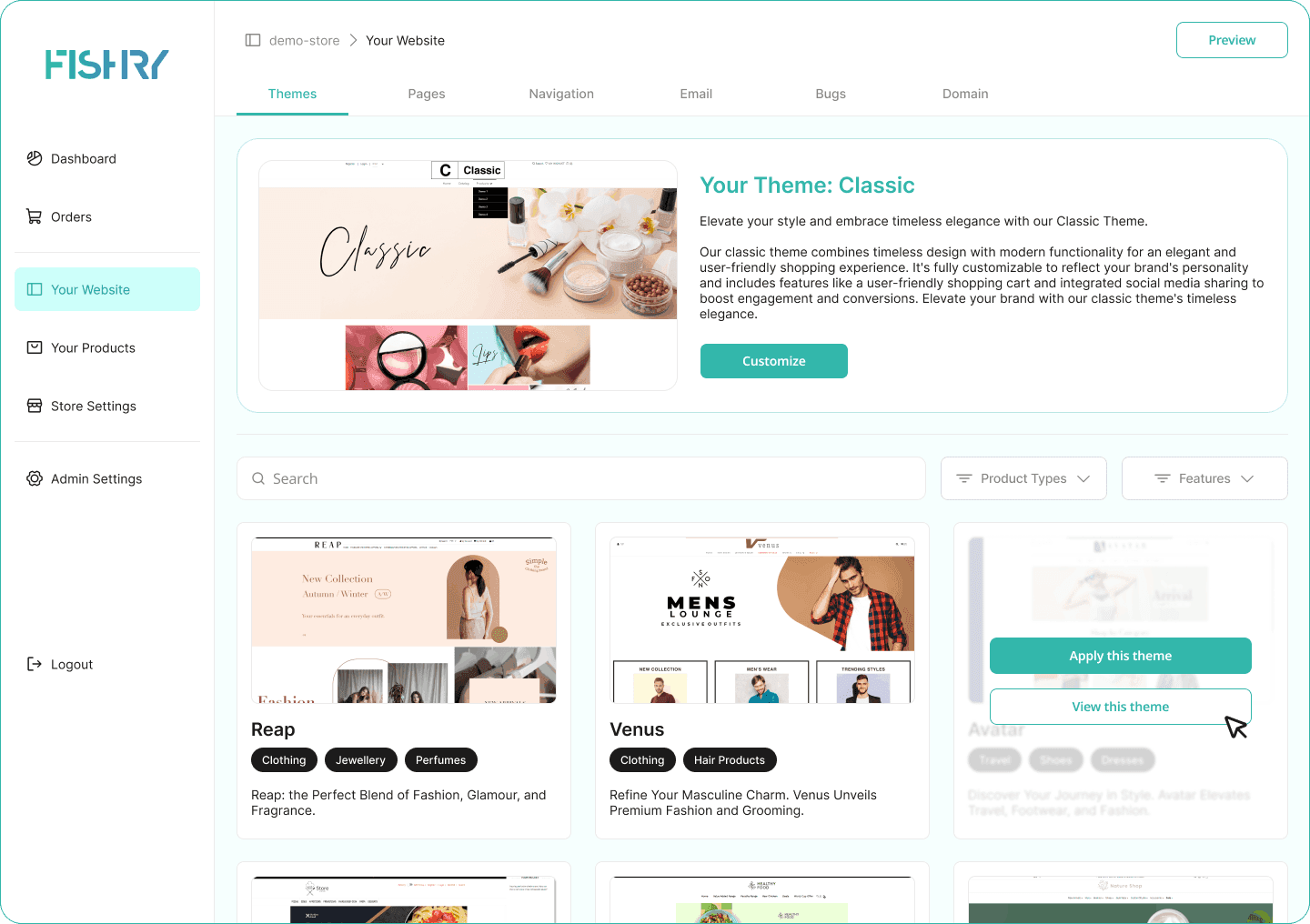
Users found it difficult to understand how pages, templates, and themes worked together. We recommended:
Clearer terminology and descriptions
Better previews to show the impact of changes
Stronger feedback loops to reduce trial-and-error
These changes helped users feel more confident while customizing their storefronts.
Website & theme management
Users found it difficult to understand how pages, templates, and themes worked together. We recommended:
Clearer terminology and descriptions
Better previews to show the impact of changes
Stronger feedback loops to reduce trial-and-error
These changes helped users feel more confident while customizing their storefronts.
Outcome and impact
Outcome and impact
The project created internal clarity and alignment around Fishry’s core usability and scalability challenges. Research and audit findings directly informed roadmap prioritization, helping stakeholders distinguish structural problems from feature gaps.
As one stakeholder shared:
“Amazing work! We can now understand our issues, and what our users are thinking.”
While the engagement focused on strategy and structure, the information architecture recommendations were shipped, laying the foundation for future product improvements.
The project created internal clarity and alignment around Fishry’s core usability and scalability challenges. Research and audit findings directly informed roadmap prioritization, helping stakeholders distinguish structural problems from feature gaps.
As one stakeholder shared:
“Amazing work! We can now understand our issues, and what our users are thinking.”
While the engagement focused on strategy and structure, the information architecture recommendations were shipped, laying the foundation for future product improvements.
Reflection
Reflection
This project strengthened my skills in information architecture, system-level UX thinking, and stakeholder alignment. Translating usability issues into business-relevant insights was challenging but reinforced the importance of framing design decisions in terms of clarity, efficiency, and growth for SMEs.
This project strengthened my skills in information architecture, system-level UX thinking, and stakeholder alignment. Translating usability issues into business-relevant insights was challenging but reinforced the importance of framing design decisions in terms of clarity, efficiency, and growth for SMEs.
Team
Team

Zahab A. Qureshi
UX Lead + Research

Ahmed R. Hashmi
Project Manager

Manahil Siddiqui
Researcher